 Biosimilars on the rise in treatment of common cancers
Bevacizumab and trastuzumab are gaining traction, improving patient access and reducing costs in cancer treatment. Summary
Domain(s): Oncology
Background
Biosimilars are a type of biologic medical product that is highly similar to an already approved reference biologic, known as the originator product. Created through complex manufacturing processes involving living organisms, biosimilars undergo rigorous evaluation by the U.S. Food and Drug Administration (FDA) to ensure their safety and efficacy before approval.
The recent approval of multiple biosimilars has enhanced patient access to biologic therapies, offering more treatment options. Additionally, biosimilars can lead to increased patient access to biologics, often at a reduced cost, due to their typically lower price compared to the originator products. However, real-world evidence on the utilization of biosimilars remains scarce, particularly in the U.S. cancer treatment landscape.
This study evaluated access to bevacizumab and trastuzumab originator products, their biosimilar uptake, and associated healthcare resource utilization.
Methods
The study sample included patients > 18 years with non-small cell lung cancer (NSCLC), metastatic colorectal cancer (mCRC), and breast cancer treated with bevacizumab and trastuzumab originator products or biosimilars.
Researchers conducted a non-interventional, retrospective, descriptive administrative claims study using de-identified data from Carelon Research's Healthcare Integrated Research Database (HIRD®).
Results
Figure 1. Trends in bevacizumab biosimilar utilization among patients with NSCLC from 2018 to 2023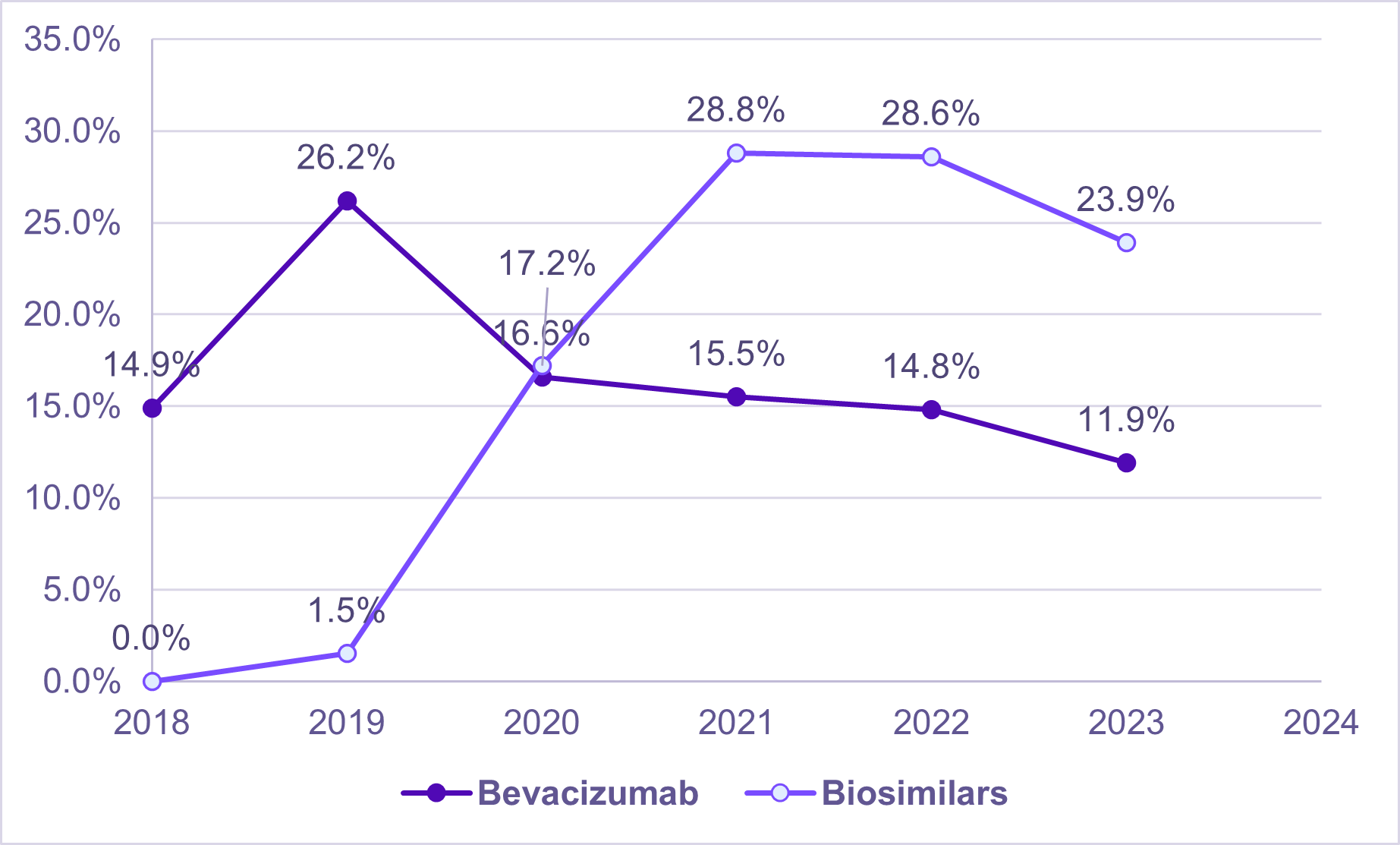
Figure 2. Trends in bevacizumab biosimilar utilization among patients with mCRC from 2018 to September 2023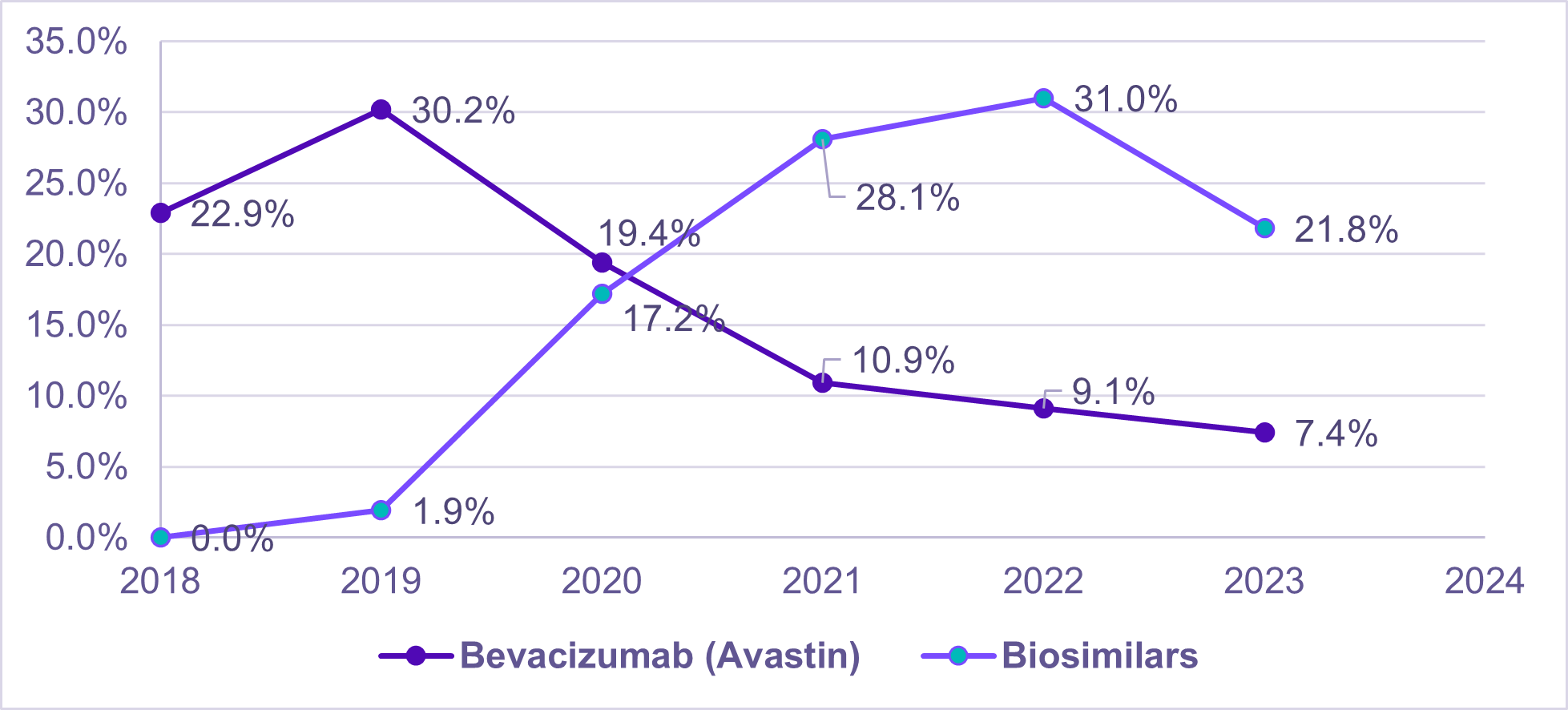
Figure 3. Trastuzumab biosimilar uptake in early-stage breast cancer patients from 2018 to September 2023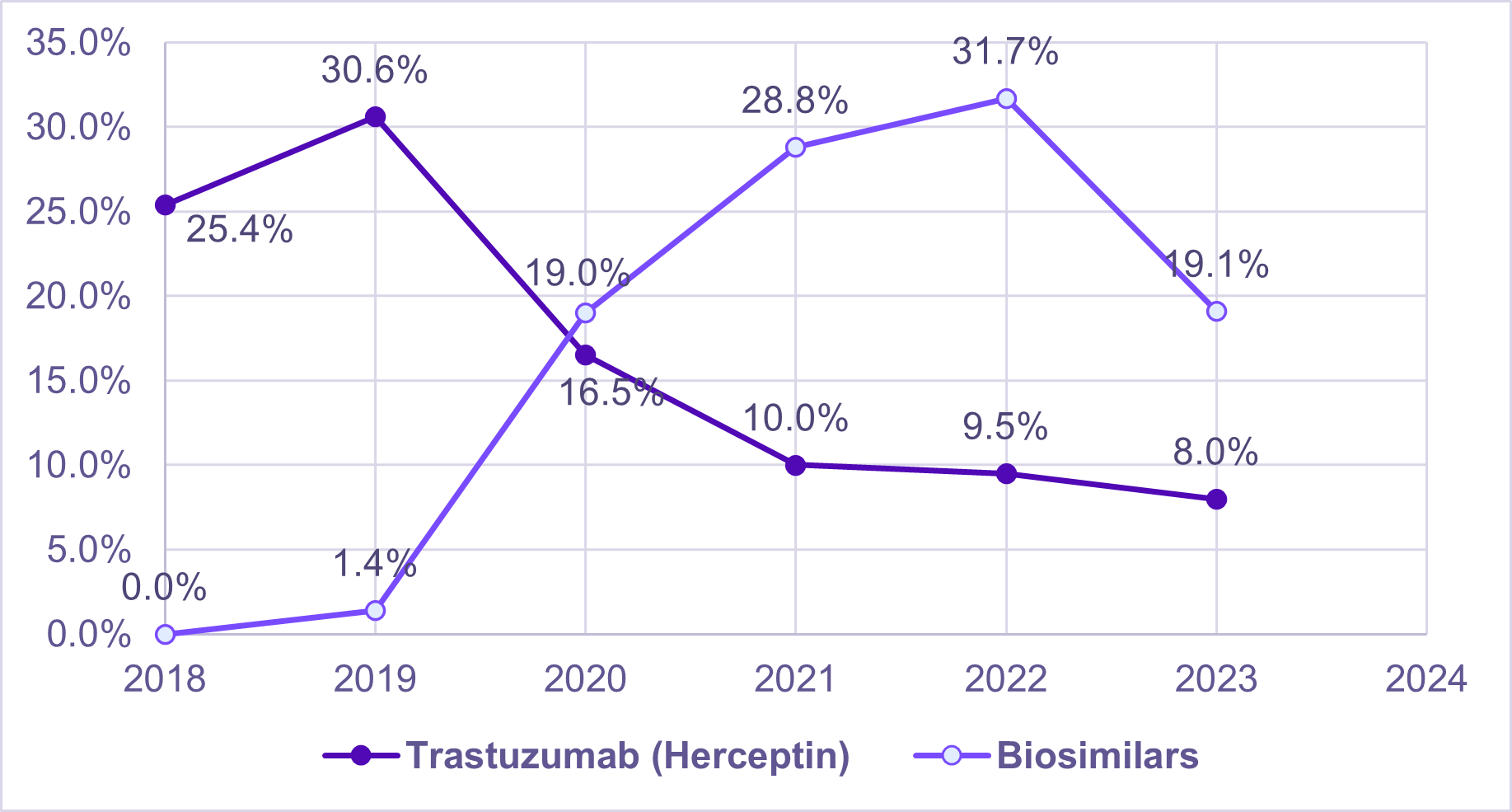
Figure 4. Trastuzumab biosimilar uptake in late-stage breast cancer patients from 2018 to September 2023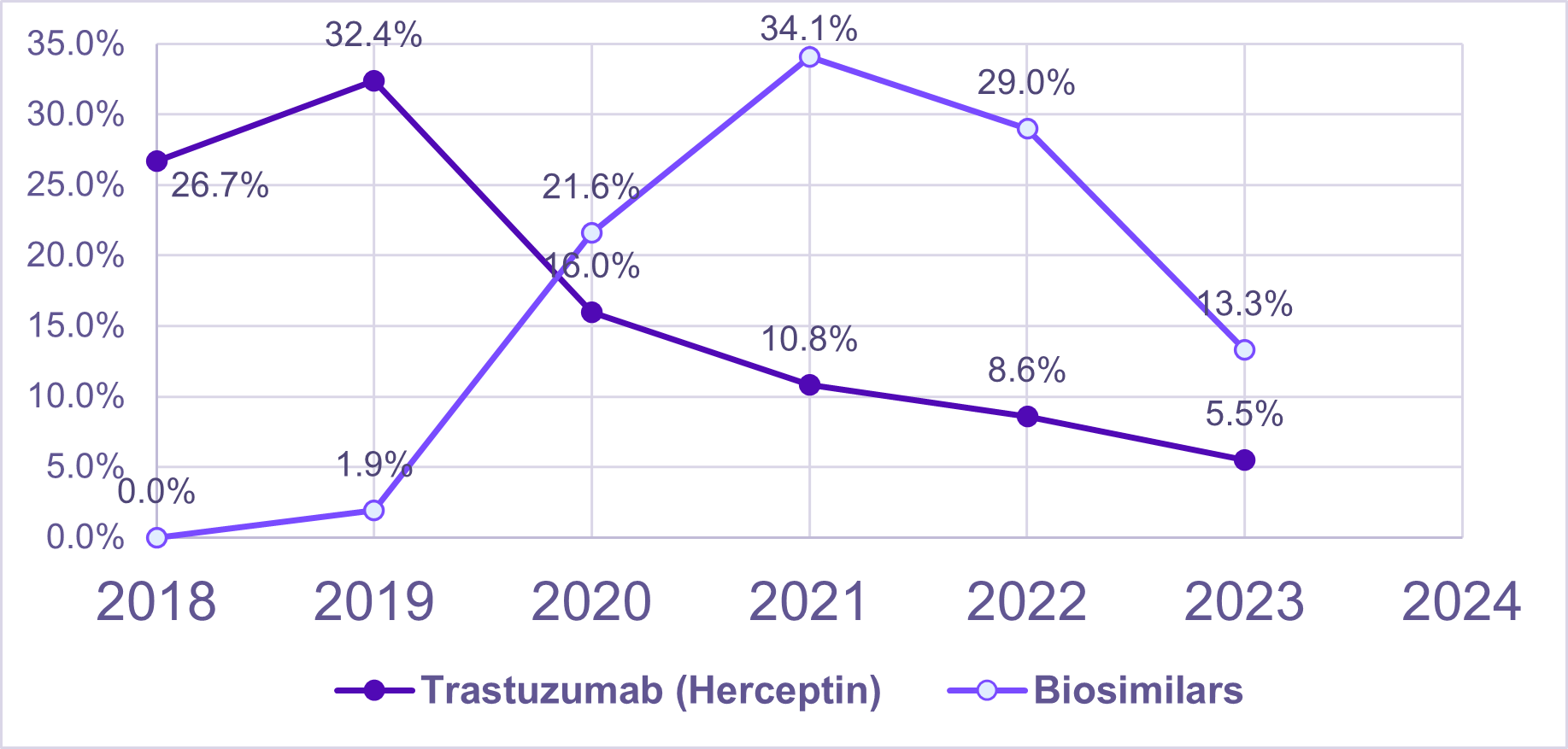
Conclusion
This study underscores an increasing acceptance of biosimilars, illustrating their widespread integration into treatment protocols. This shift not only aligns with insurers' and providers' preferences for cost-effective treatment options but also suggests that biosimilars offer an effective alternative to originators for patients.
Key takeaways
Publications
Carelon Research project team: Ruth Dixon, (PI) John Barron, Malvika Venkataraman, Kaitlyn Hopkins
For more information on a specific study or to connect with the Actionable Insights Committee,
contact us at [email protected].
Sponsor: Carelon Research, Inc., a subsidiary of Elevance Health. This study was funded in collaboration with Biologics & Biosimilars Collective Intelligence Consortium (BBCIC).
Dissemination and sharing of the Newsletter is limited to Elevance Health and its subsidiaries, and included findings and implications are for Elevance Health and its affiliates’ internal use only.
Lorem ipsum dolor sit amet, consectetur adipisicing elit, sed do eiusmod tempor incididunt ut labore et dolore magna aliqua. Ut enim ad minim veniam, quis nostrud exercitation ullamco laboris nisi ut.

"Et harum quidem rerum facilis est et expedita distinctio!"

"Nam libero tempore, cum soluta nobis est eligendi."

"Temporibus autem quibusdam et aut officiis debitis!"