
 Adherence to inhaled COPD medications results in significant clinical and economic benefits
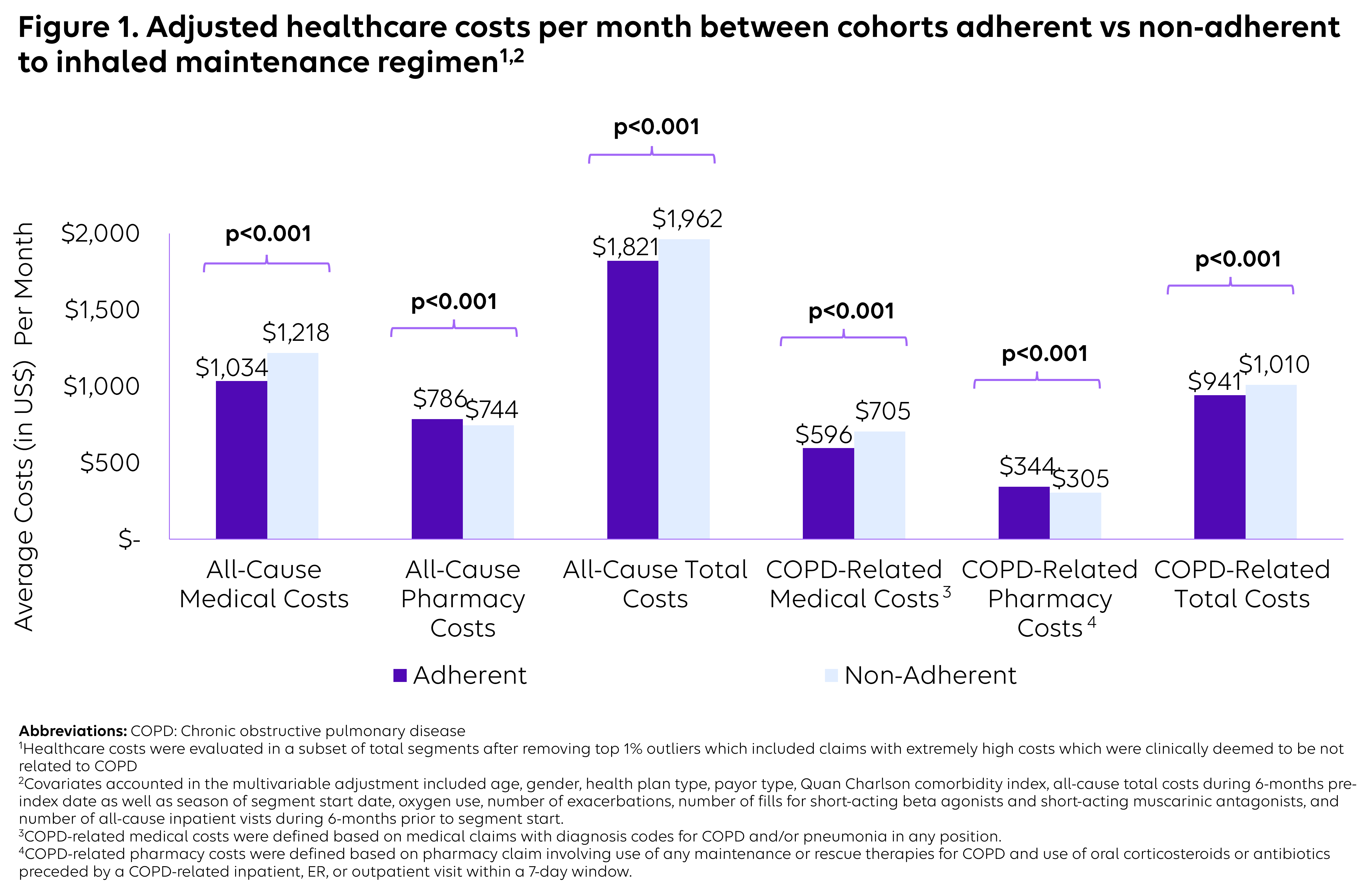
Adherence to COPD regimen resulted in an estimated average saving of $141 per patient per month in total costs in addition to improved survival and lower risk of hospitalization. Enterprise Analytics Core domain(s): Cost of care, quality of care, CarelonRx, value of integrated benefit Summary
Background
In the US, COPD causes substantial illness, cost, and even death. While adherence to inhaled medications remains poor, there is little evidence assessing the causal relationship between the use of these medications and health outcomes in real-world settings.
Objective and methods
Researchers at Carelon Research used longitudinal integrated medical and pharmacy claims data from Commercial and Medicare insured Anthem members with COPD to establish a causal relationship between COPD medication adherence and health outcomes. Medication adherence was measured based on proportion of days covered (PDC) by the regimen (PDC≥80% regarded as adherent). Researchers employed robust causal inference methods—marginal structural models, to account for factors that change over time, including adherence and patient risk factors.
Results
Of 86,307 patients with COPD, after accounting for differences in clinical and sociodemographic characteristics between adherent vs non-adherent groups, adherence to COPD regimen for at least 11 months resulted in:
Key takeaways
Publication(s)
Carelon Research project team: Shivani Pandya, Hiangkiat (Jason) Tan, Vincent J. Willey, Nicole Thomas, Chia-Chen (Jenny) Teng, Zhengzheng Jiang*, Megan Reidy, Aaron Haynes
The team at Carelon Research would also like to acknowledge significant contributions to this study from Chelsea Day and A.J. Davis^ at CarelonRx and Mark Napier at Elevance Health.
*At Carelon Research at the time of this study
^At CarelonRx at the time of this study
For more information on a specific study or to connect with the Actionable Insights Committee, contact us at [email protected].This study was conducted by Carelon Research, Inc. (formerly HealthCore, Inc.), a subsidiary of Elevance Health, in collaboration with CarelonRx, and sharing of the Newsletter is limited to Elevance Health and its subsidiaries and included findings and implications are for Elevance Health and its affiliates’ internal use only.
Lorem ipsum dolor sit amet, consectetur adipisicing elit, sed do eiusmod tempor incididunt ut labore et dolore magna aliqua. Ut enim ad minim veniam, quis nostrud exercitation ullamco laboris nisi ut.

Findings suggest deductible levels have little impact on breast cancer care during two years following diagnosis.

Death data from a combination of sources including Elevance Health may prove to be a reliable source for advancing our research and understanding of treatments and mortality.

Common adverse reactions included arm soreness, fatigue, and fever, but no serious adverse events, such as recurrent MIS-C or myocarditis, were reported.

"Et harum quidem rerum facilis est et expedita distinctio!"

"Nam libero tempore, cum soluta nobis est eligendi."

"Temporibus autem quibusdam et aut officiis debitis!"
