
 A comparison of death data from multiple sources and the National Death Index
Death data from a combination of sources including Elevance Health may prove to be a reliable source for advancing our research and understanding of treatments and mortality. Enterprise Analytics Core domain(s): oncology, quality of care Summary
Background
Although identifying patient death dates is critical for many studies, these data are not systematically recorded in health claims or electronic medical records. The National Death Index (NDI) is considered a “gold standard” source of mortality data in the US. However, using NDI data often involves considerable time and resources. While alternative sources may be used, their sensitivity and accuracy may not be consistent over time.
Objective
This study investigated the consistency of alternative sources of death date data available within Elevance Health with the NDI over time.
Methods
This study utilized data from US advanced cancer patients who were already linked to the NDI between January 2010 and December 2018*. Alternative death date sources, including inpatient discharge status, health plan disenrollment, Social Security Death Master File (DMF), and online obituary data, were compared to the NDI. For each year of the study, we evaluated how accurately the alternative source matched the gold standard (NDI) data by calculating the following:
Results
We identified death dates from any source for 27,396 of 40,692 advanced cancer patients from 2010 to 2018. In 2010, the DMF had a matching date for 77% (95% CI: 76%, 79%) of death dates identified in the NDI data (i.e. moderate sensitivity), but this declined to 13% (95% CI: 11%, 14%) in 2018. For the obituary data, these figures rose from 46% (95% CI: 45%, 48%) in 2010 to 71% (95% CI: 68%, 73%) in 2018. The presence of death date from an alternative source accurately reflected the presence of a death date in the NDI data (high PPV) throughout the study period, and a high percentage of members lacking a death date from one soure (alternative or NDI) lacked a date from the other (high specificity and NPV).
Figure 1. Annual validation metrics of death date data sources available in the HIRD 2010-2018*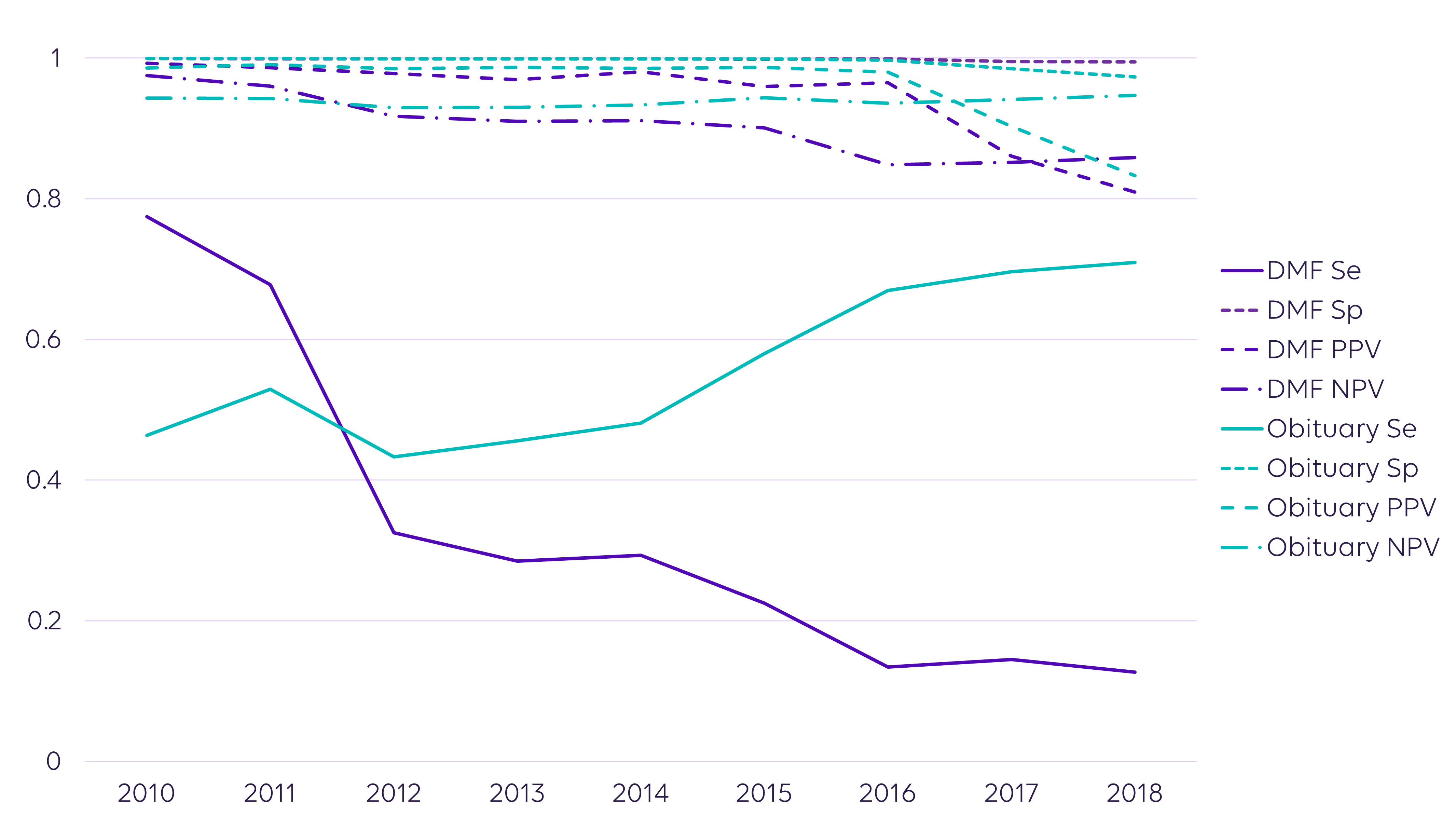
*NDI data for 2018 were incomplete.
Key takeaways
Publication(s)
Carelon Research project team: Aziza Jamal-Allial, Daniel C. Beachler, Biruk Eshete, Anahit Papazian, Todd Sponholtz, Shiva K. Vojjala
For more information on a specific study or to connect with the Actionable Insights Committee, contact us at [email protected].Dissemination and sharing of the Newsletter is limited to Elevance Health and its subsidiaries and included findings and implications are for Elevance Health and its affiliates’ internal use only.
Lorem ipsum dolor sit amet, consectetur adipisicing elit, sed do eiusmod tempor incididunt ut labore et dolore magna aliqua. Ut enim ad minim veniam, quis nostrud exercitation ullamco laboris nisi ut.

Adherence to COPD regimen resulted in an estimated average saving of $141 per patient per month in total costs in addition to improved survival and lower risk of hospitalization.

Common adverse reactions included arm soreness, fatigue, and fever, but no serious adverse events, such as recurrent MIS-C or myocarditis, were reported.

Findings suggest deductible levels have little impact on breast cancer care during two years following diagnosis.

"Et harum quidem rerum facilis est et expedita distinctio!"

"Nam libero tempore, cum soluta nobis est eligendi."

"Temporibus autem quibusdam et aut officiis debitis!"
