
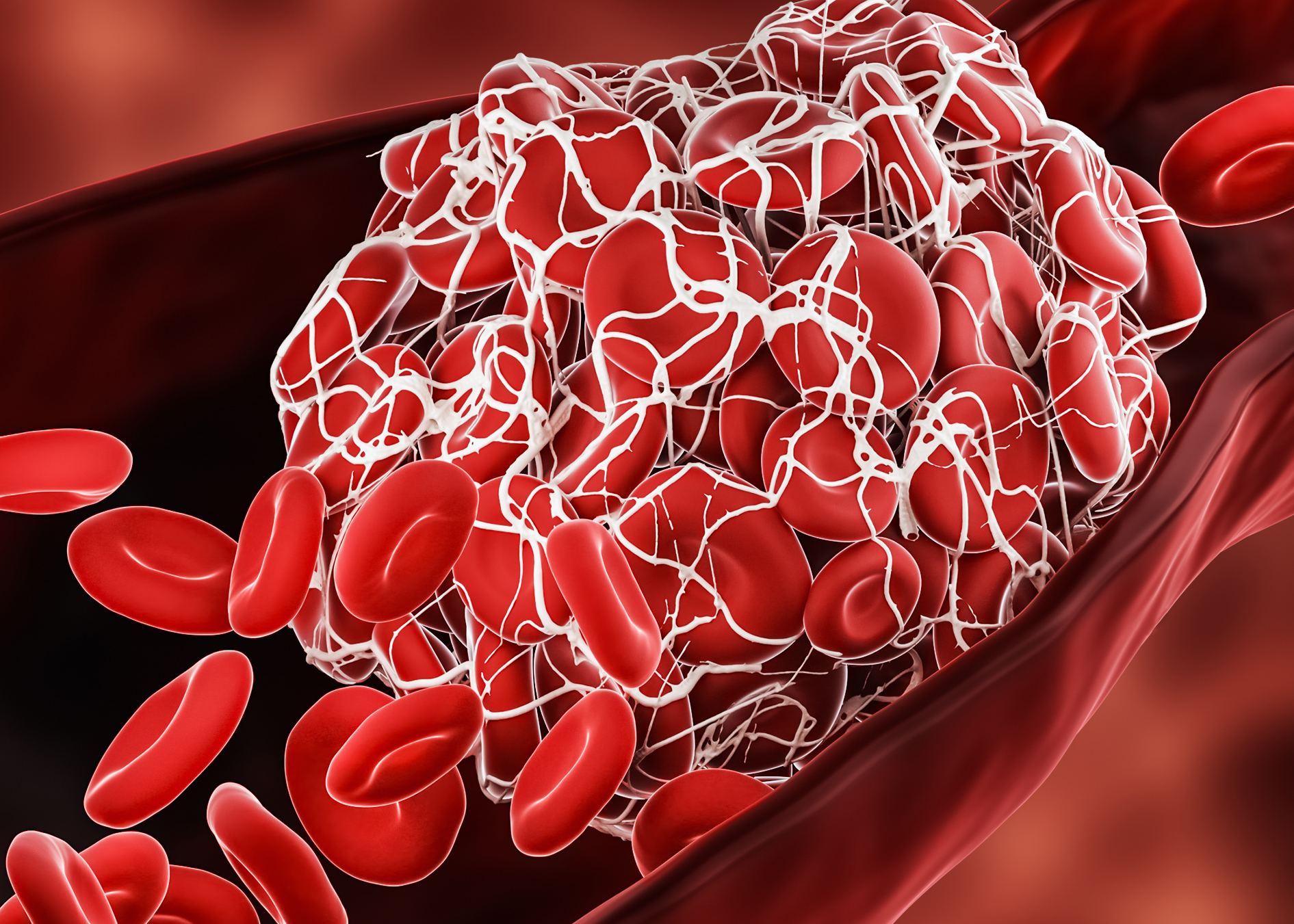
 Study finds medical device effective for treating life-threatening blood clots in the lung and leg
After the placement of the inferior vena cava filter, no fatal venous thromboembolisms occurred, and no pulmonary embolisms occurred in patients who received filters to prevent them. Enterprise Analytics Core domain(s): Cardiometabolic Summary Key takeaways
Background
Venous thromboembolism (VTE) is a condition that occurs when a blood clot forms in a vein, and can be the cause of serious conditions, such as pulmonary embolism (PE), a blood clot in the lung, and deep vein thrombosis (DVT), a blood clot in the leg. VTE occurs in nearly 400,000 people in the United States each year, and results in over 250,000 deaths annually.
The standard treatment for VTEs is called anti-coagulation, which is the use of a medicine to prevent blood from clotting, or to prevent existing clots from getting larger. Inferior vena cava (IVC) filters, small wire devices that are inserted into the inferior vena cava to prevent blood clots from traveling to the lungs, have become commonly used in people who have VTE but cannot tolerate anticoagulation medication.
The preventative use of IVC filters has increased steadily in settings where anticoagulation medication is thought to be inadequate or put a patient at a high bleeding risk, but there are limited data to support this increased use in patients without blood clots.
Objective
The Predicting Safety and Effectiveness in Inferior Vena Cava Filters (PRESERVE) study aimed to evaluate the safety and effectiveness of IVC filters in patients who needed PE prevention but could not take anticoagulation medicine.
Methods
PRESERVE was a prospective, open-label, non-randomized study of all commercially available IVC filters. The Society of Interventional Radiology and the Society for Vascular Surgery collaborated with Carelon Research to conduct the study at 54 sites in the United States between October 2015 and March 2019. During that time, filters were implanted in 1,421 patients, of which 1,019 patients had an existing clot in their leg, DVT, or a PE. Patients were followed for either one month after their IVC filter removal, or, if they had a permanent filter placed, up to 24-months after IVC filter placement.
Results
Publications
Carelon Research project team: Katherine Scott*, Bernet Kato, Xiangyu Mu*, Olivia Wheaton, Seth Lewis
*Carelon Research associate at the time of the study.
For more information on a specific study or to connect with the Actionable Insights Committee,
contact us at [email protected].
Carelon Research, Inc., a subsidiary of Elevance Health, serves as the Data Coordinating Center for this study. This study was funded by the IVC filter Study Group Foundation. Dissemination and sharing of the Newsletter is limited to Elevance Health and its subsidiaries and included findings and implications are for Elevance Health and its affiliates’ internal use only.
Lorem ipsum dolor sit amet, consectetur adipisicing elit, sed do eiusmod tempor incididunt ut labore et dolore magna aliqua. Ut enim ad minim veniam, quis nostrud exercitation ullamco laboris nisi ut.
Lorem ipsum dolor sit amet, consectetur adipisicing, sed do eiusmod tempor incididunt ut labore et dolore magna aliqua. Ut enim ad minim veniam, quis nostrud exercitation ullamco laboris nisi ut. Ut ad minim veniam.
Vestibulum ante ipsum primis in faucibus orci luctus etel ultrices posuere cubilia Curae.
Lorem ipsum dolor sit amet, consectetur adipisicing elit, sed do eiusmod tempor incididunt ut labore et dolore magna aliqua. Ut enim ad minim veniam, quis nostrud exercitation ullamco laboris nisi ut.

Sed ut perspiciatis unde omnis iste natus error sit voluptatem!

Nemo enim ipsam voluptatem quia voluptas sit odit aut fugit!

Ut enim ad minima veniam, quis nostrum exercitationem ullam!

"Et harum quidem rerum facilis est et expedita distinctio!"

"Nam libero tempore, cum soluta nobis est eligendi."

"Temporibus autem quibusdam et aut officiis debitis!"