
 A rising tide: ADHD medication prescribing in adults
Adult use of ADHD medications increased dramatically between 2017-2021. Even more concerning: one in five medication users did not have an ADHD diagnosis. Enterprise Analytics Core domain(s): Behavioral health, quality of care Summary
Background
Pharmacy trend reports have indicated a sharp growth in the use of attention-deficit/hyperactivity disorder (ADHD) medications within our membership. There has been an interest in a deeper understanding of factors driving this ADHD medication utilization trend.
Objective
To describe and explore trends and driving factors of ADHD medication prescribing from 2017-2021.
Methods
Carelon Research analyzed data from commercial and Medicare insured Elevance Health members with integrated medical and pharmacy benefits receiving one or more ADHD prescriptions between 2017-2021. Stimulants included amphetamine, dexmethylphenidate, dextroamphetamine, dextroamphetamine and amphetamine, lisdexamfetamine, methamphetamine, and methylphenidate; non-stimulants included atomoxetine, clonidine, guanfacine, and viloxazine. Utilization of ADHD medications was standardized to facilitate meaningful comparisons across years.
Results
Figure 1. ADHD medication use prevalence among adults by age group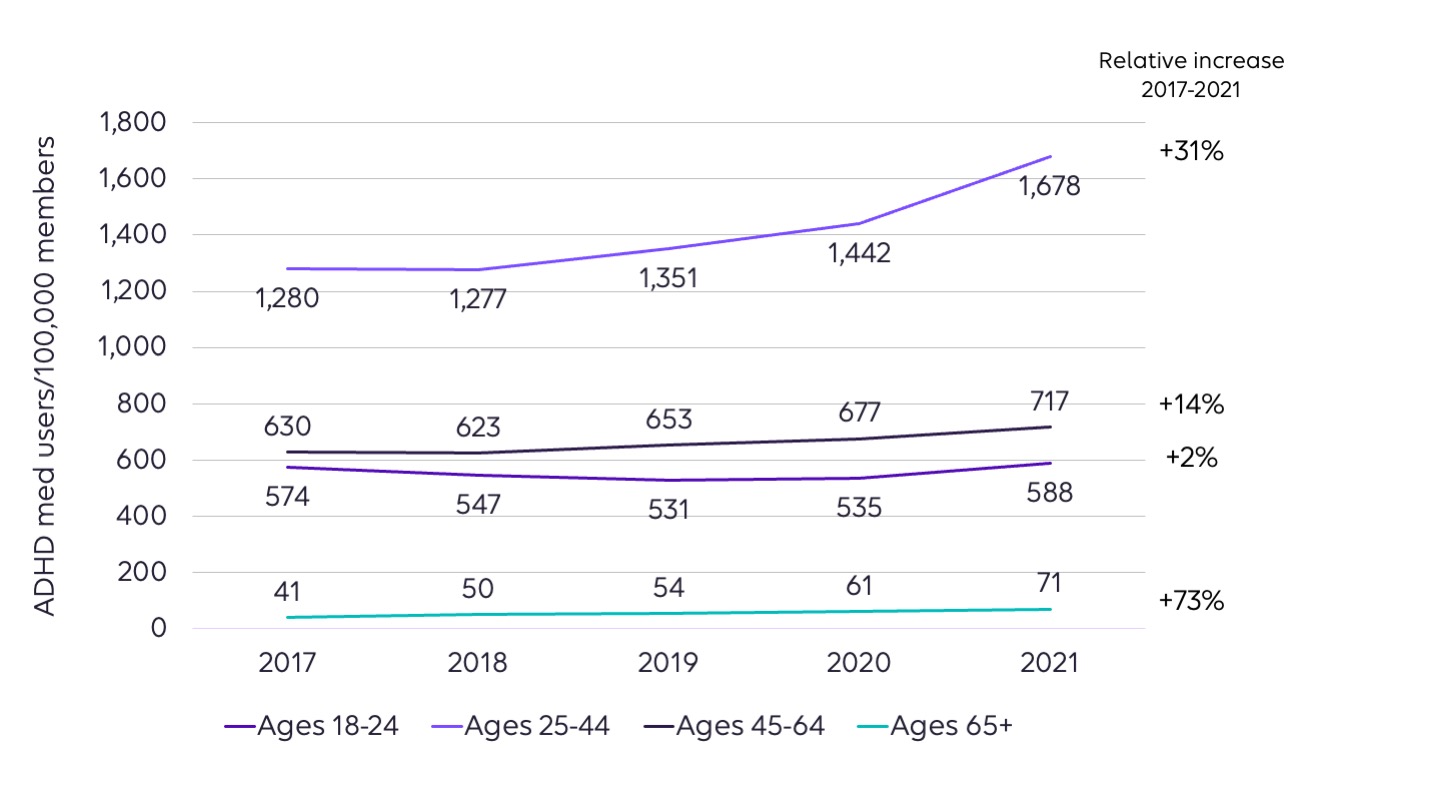 Key takeaways
Carelon Research project team:
For more information on a specific study or to connect with the Actionable Insights Committee,
contact us at [email protected].
Carelon Research conducted this study in collaboration with CarelonRx. Dissemination and sharing of the Newsletter is limited to Elevance Health and its subsidiaries and included findings and implications are for Elevance Health and its affiliates’ internal use only.
Lorem ipsum dolor sit amet, consectetur adipisicing elit, sed do eiusmod tempor incididunt ut labore et dolore magna aliqua. Ut enim ad minim veniam, quis nostrud exercitation ullamco laboris nisi ut.
Lorem ipsum dolor sit amet, consectetur adipisicing, sed do eiusmod tempor incididunt ut labore et dolore magna aliqua. Ut enim ad minim veniam, quis nostrud exercitation ullamco laboris nisi ut. Ut ad minim veniam.
Vestibulum ante ipsum primis in faucibus orci luctus etel ultrices posuere cubilia Curae.
Lorem ipsum dolor sit amet, consectetur adipisicing elit, sed do eiusmod tempor incididunt ut labore et dolore magna aliqua. Ut enim ad minim veniam, quis nostrud exercitation ullamco laboris nisi ut.

Sed ut perspiciatis unde omnis iste natus error sit voluptatem!

Nemo enim ipsam voluptatem quia voluptas sit odit aut fugit!

Ut enim ad minima veniam, quis nostrum exercitationem ullam!

"Et harum quidem rerum facilis est et expedita distinctio!"

"Nam libero tempore, cum soluta nobis est eligendi."

"Temporibus autem quibusdam et aut officiis debitis!"